
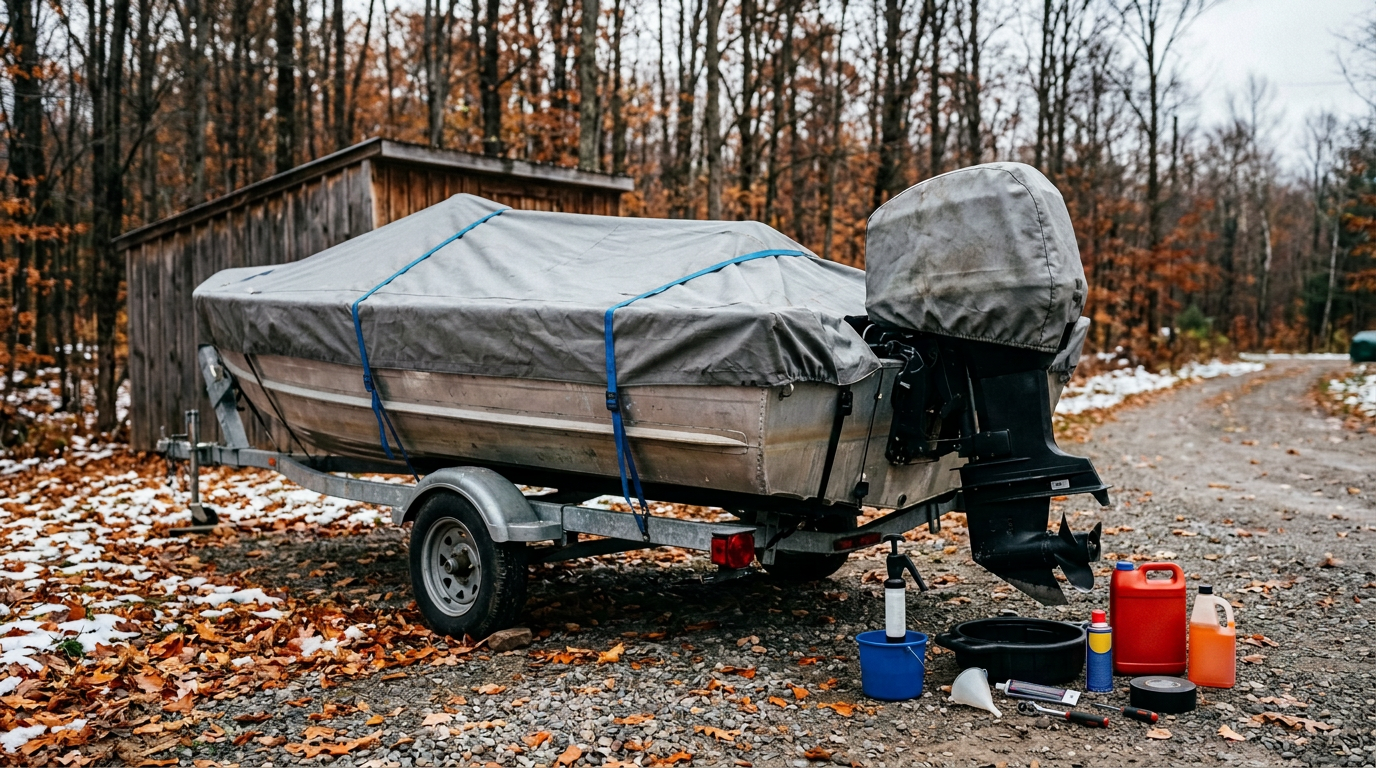
A boat winterization kit is not one universal box. It is a model-specific collection of fluids, filters, seals, tools and labels needed to protect the engine, fuel system, plumbing, batteries and hull during storage. The safest kit begins with the manuals and a walk-through of every system that can retain water.
Affiliate disclosure: Brighter Boater may earn a commission from qualifying purchases at no added cost to you.
The five lists to build first
- Engine: exact model, serial number, oil capacity, filters, gear lubricant, drain seals and approved corrosion procedure.
- Fuel: tank type, fuel age, filter/water separator, manufacturer-approved stabilizer and local disposal plan.
- Water systems: freshwater tank, heater, heads, washdowns, livewells, pumps, strainers and air-conditioning.
- Electrical: battery chemistries, disconnect arrangement, charger type and storage location.
- Hull and storage: drain plugs, cover supports, ventilation, trailer support and pest control.
Engine supplies
- Manufacturer-specified engine oil and filter for a four-stroke.
- Specified gearcase lubricant, pump and new drain/fill screw seals.
- Fuel filter or water-separating element if due.
- Fogging or storage-seal product only if the manual calls for it.
- Approved grease, corrosion protectant and replacement anodes if inspection shows they are due.
- Absorbent pads, drain pan, funnels, labels and containers for recycling used fluids.
Do not buy by horsepower alone. Two engines with the same horsepower can use different filters, quantities, spark plugs and storage procedures.
Flushing supplies
Choose the freshwater connection specified for the engine. A compatible flushing-muff option may work for engines whose manuals permit it; verify the inlet layout. A salt-removal concentrate is optional and must be compatible with the engine maker’s process.
Plumbing and sanitation supplies
Use only the antifreeze type and concentration approved for potable-water and sanitation systems. Automotive ethylene-glycol coolant is not a substitute for pink propylene-glycol potable-water antifreeze. Some systems are best drained and bypassed; others need antifreeze pumped through each branch. Water heaters, accumulator tanks, filters and low loops are common places for water to hide.
- Potable-water antifreeze in a quantity calculated from system volume and purge needs.
- Water-heater bypass fittings if the system supports them.
- Short pickup hose or pump adapter.
- Spare hose clamps and approved thread sealant where the manual allows it.
- Labels for every bypassed valve, removed plug and disconnected line.
Battery and electrical supplies
Include terminal-cleaning tools, corrosion protection, insulated terminal covers, and a charger matched to voltage and chemistry. Confirm whether the charger is intended for onboard installation or shore-side use. Never improvise with an extension cord in a wet area, and do not leave a portable charger unattended unless its instructions allow the exact setup. Read our marine-battery mounting guide before changing the tray, hold-down, or terminal protection.
Cover and moisture-control supplies
A winter cover must shed rain and snow without trapping moisture. Use a proper support frame, chafe protection and tie-down points that cannot damage paint or upholstery. Do not rely on bungee hooks that can release under load. Desiccant can help in a closed locker, but it does not replace drainage and ventilation.
Items that are often unnecessary—or dangerous
- A universal fogging step on an engine whose manual specifies another method.
- Excess fuel stabilizer.
- Automotive antifreeze in potable-water systems.
- Household plastic tarps touching gelcoat for months.
- Unrated heaters or incandescent work lights left in the boat.
- Random replacement anodes with the wrong alloy.
- Mixing unfamiliar greases or lubricants.
A practical shopping sequence
- Print the current manuals.
- Inspect the boat before ordering anything.
- Record exact part numbers and fluid specifications.
- Buy consumables plus one spare seal or gasket for critical drain points.
- Lay out the supplies in task order and photograph the original configuration.
- Create a spring recommissioning list while disassembling.
For the complete procedure, read How to Winterize an Outboard Motor.
Sources and further reading
- Mercury Marine winter-storage guidance
- Mercury Marine outboard-winterization guidance
- Yamaha Outboards owner-manual lookup
Generic kits can omit required parts or include products your equipment maker prohibits. The manuals for the installed systems control.