
Pip: Buying a used boat is one of those decisions where optimism and saltwater mix in unpredictable ways — Brighter Boater has been thinking hard about how to protect buyers before they sign anything.
Mara: Today we're walking through what a proper pre-purchase inspection actually looks like — the survey, the engine check, the sea trial, and when each one matters.
Pip: Let's start with the central question: do you actually need a marine survey?
Do You Need a Marine Survey When Buying a Used Boat?
Mara: The post frames this as a layered decision, not a single yes-or-no. The core argument is that "get a survey" is useful shorthand that hides something important about scope.
Pip: Right — and the post puts it plainly: "a general marine survey, a mechanic's engine inspection, and a sea trial answer different questions. The best buying decision often comes from using all three, with the scope matched to the boat."
Mara: So the upshot is that each of those three components is doing a distinct job. The hull survey looks at structure, systems, and value. The engine inspection goes deep on propulsion. The sea trial shows behavior under real load — things a dockside check simply cannot surface.
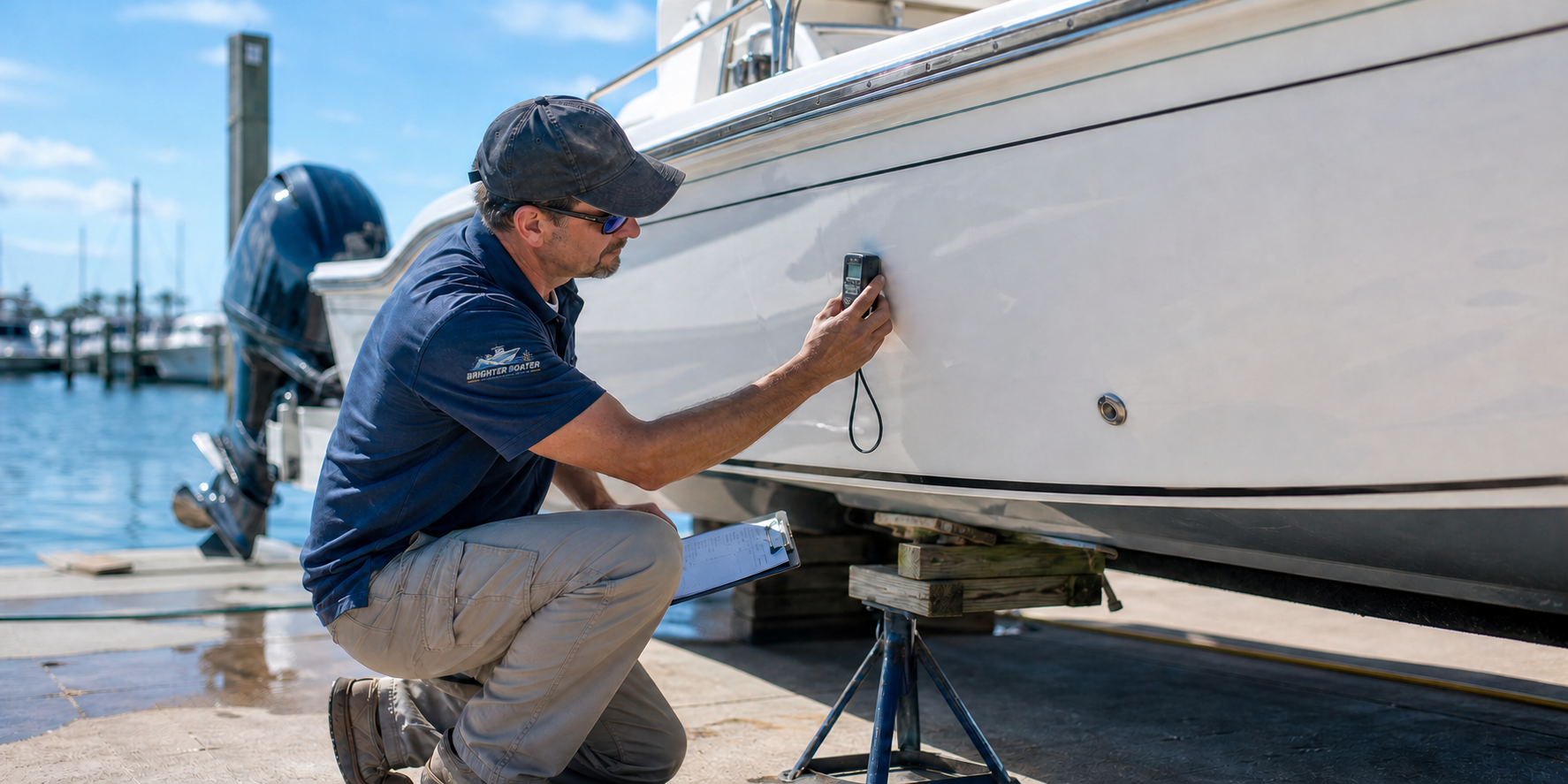
Pip: The fiberglass section is where it gets sobering. The concern is not a scratch in the gelcoat; it is water sitting inside a cored deck or transom long enough to weaken the structure — and a moisture meter reading alone is not a diagnosis.
Mara: The post is careful on that point. It asks: what evidence supports the conclusion, how extensive is the affected area, and what repair is actually recommended? Below the waterline, the stakes climb further — a failed fitting can become a flooding problem on an unattended boat.
Pip: And then there is the seller's survey, which sounds reassuring right up until you read why it isn't. It was prepared for someone else, may have a narrower scope, and condition changes while the report sits in a file.
Mara: The post also flags insurance as a variable buyers often overlook. Requirements vary by insurer, boat age, value, and intended use — and you should not assume a boat is easy to insure because the seller currently has coverage.
Pip: There is a sensible checklist at the end: inspect before offering, write contingencies into the contract rather than handling them with a handshake, hire your own surveyor, attend the inspection, and read the reports before releasing the contingency.
Mara: The closing line lands the whole thing: the point of a survey is not to find a perfect used boat. It is to replace guesswork with a clear view of condition, likely repairs, and ownership risk.
Pip: Structural moisture and fuel leaks are not bargaining chips — that framing deserves to travel.
Mara: The throughline here is that due diligence on a used boat is not one thing — it's a set of questions, each with the right tool to answer it.
Pip: Ask the questions before the money moves. More on what Brighter Boater is watching next time.